Travel tips
How much does a trip to Italy cost?
A mid-range trip to Italy typically costs between €150 and €250 per day per person, including a decent hotel, sit-down meals, and some sightseeing. Budget travelers can get by on €70 to €90 per day, while luxury travelers will easily spend upwards of €500. Knowing local pricing habits: like drinking coffee standing up: can save you hundreds of euros.
Planning a trip to Italy is incredibly exciting, but it is easy to get anxious when trying to figure out the budget. One website tells you that Italy is incredibly cheap if you eat pizza every day, while another warns that a single lunch in Venice will wipe out your savings.
The truth lies somewhere in the middle. I built TruePrice to help travelers cut through the noise and figure out what locals actually pay for everyday things. Italy is a country where a three-minute walk can be the difference between a €1.20 espresso and a €7.00 tourist trap bill. Here is a realistic look at how much a trip to Italy costs, how to budget for the big three cities, and how to avoid getting overcharged along the way.
How much does a typical day in Italy actually cost?
Your daily spend in Italy depends heavily on your travel style. Let us break it down into three distinct tiers: budget, mid-range, and luxury. These figures assume you are splitting the cost of a double room with a partner.
If you are traveling on a backpacker budget, expect to spend about €70 to €90 per day. This covers a bed in a decent hostel dorm, public transport, grocery store lunches, and cheap dinner options like pizza by the slice (pizza al taglio).
For a mid-range traveler, a realistic daily budget is €150 to €250. This gets you a highly-rated, centrally located three-star hotel or private apartment, a couple of sit-down meals at local trattorias, museum entry tickets, and a few glasses of regional wine.
If you want boutique four-star or five-star hotels, private transfers, and fine dining, your budget will start at €500 per day and go up from there.
The budget differences between Rome, Florence, and Venice
Not all Italian cities are priced equally. Rome, Florence, and Venice are the classic trio, but they present very different budget challenges.
Rome is massive, which means it has a huge range of options. You can find incredibly cheap, world-class street food and budget accommodation if you stay slightly outside the historic center (such as the Trastevere or San Lorenzo neighborhoods). Expect to pay around €120 to €180 per night for a solid mid-range hotel here.
Florence is much more compact. Because you can walk everywhere, you save on transport, but central accommodation is premium. A good mid-range hotel in the historic center usually runs €150 to €220 per night during the shoulder season.
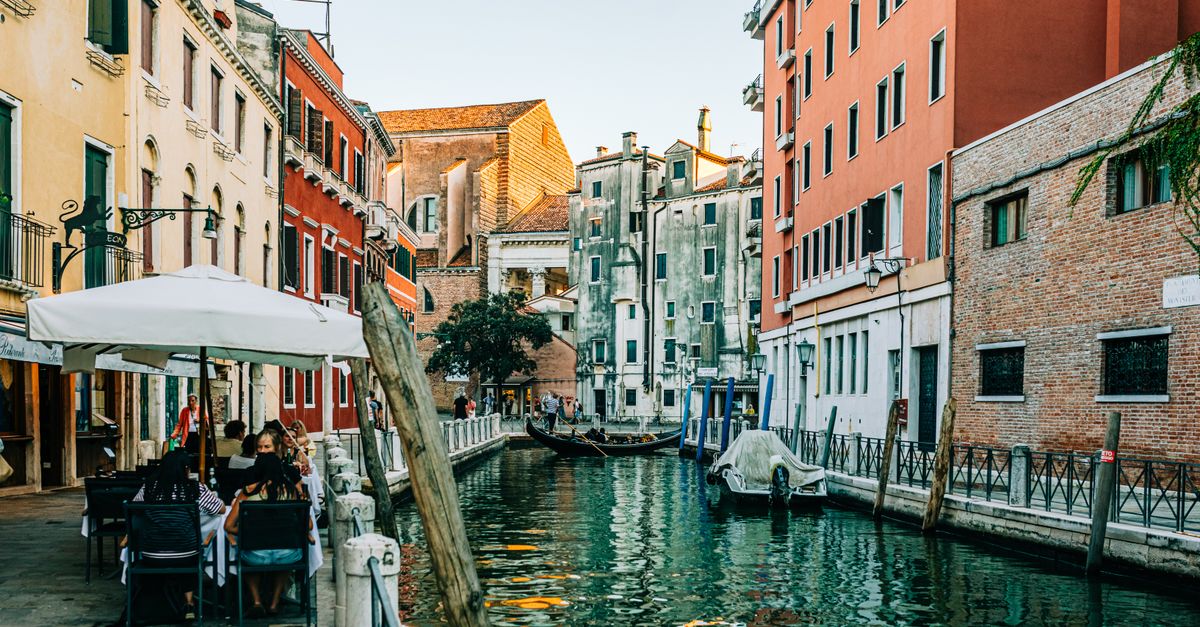
Venice is the most expensive of the three. Space is limited, logistics are complicated (everything must be brought in by boat), and the tourist-to-local ratio is massive. A decent mid-range hotel on the main island will easily cost €180 to €280 per night. If you want to save money, consider staying in Mestre on the mainland and taking a quick ten-minute train into the city each morning.
How to avoid the tourist tax on espresso and gelato
Food is one of the best parts of Italy, but it is also where tourists get ripped off the most. The trick is understanding Italian food culture.
Let us start with coffee. In Italy, coffee is a quick, standing ritual. If you walk into a local bar, order an espresso at the counter (al banco), and drink it standing up, it will cost you between €1.00 and €1.50. If you sit down at a table (al tavolo), especially in a busy piazza, that exact same espresso can easily cost €5.00 or more. The menu must list both prices by law, so always check before sitting.
Gelato is another common trap. Real, artisanal gelato is not piled high in giant, brightly colored mountains. Those fluffy, neon-green pistachio mounds are packed with artificial emulsifiers and vegetable fats designed to attract tourists. Real gelato is kept in flat metal tins, often with lids (pozzetti), and uses natural colors: pistachio should be a pale brownish-green, not bright mint green. A fair price for a small or medium cup is €2.50 to €4.00. If a shop charges €8.00 or more for a basic cone, walk away.
Decoding the coperto and avoiding restaurant bill traps
When you sit down at an Italian restaurant, you will almost always see a charge on your bill called the coperto. This is a standard, legal cover charge that covers the bread, tablecloth, and service.
A fair coperto is €1.50 to €2.50 per person. It should be clearly printed at the bottom of the menu. If you sit down at a restaurant near the Colosseum or St. Mark’s Square and the coperto is €5.00 or €6.00 per person, you are in a tourist trap.
Another trick to watch out for is the service charge (servizio). In Italy, tipping is not expected because service is included in the price of the food and the coperto. However, some tourist-heavy restaurants will sneak a 15% to 20% “servizio” onto the bill for English-speaking tourists. If you see this, check the menu to see if it was clearly disclosed. If it was not, you have every right to ask them to remove it.
Getting around without getting ripped off on Italian transport
Italy has an excellent, affordable high-speed train network (Trenitalia and Italo). Booking your train tickets between Rome, Florence, and Venice a few weeks in advance can save you up to 50% compared to buying them on the day of travel. A high-speed ticket from Rome to Florence usually costs €25 to €45 when booked early, but can jump to €60+ at the last minute.
Inside the cities, stick to public transport. Rome has a straightforward metro and bus system where a single ride costs €1.50. Venice has the Vaporetto (water bus), which is expensive at €9.50 for a single 75-minute ticket, but you can buy 24-hour or 48-hour passes to bring the average cost down.
Taxis are where travelers often run into trouble. Always use official, metered taxis: they are white and have a “Taxi” sign on the roof and a license number on the door. Never accept a ride from someone waving you down inside an airport or train station terminal. Make sure the driver turns on the meter (tassametro) when you get in. A typical ride within Rome or Florence should cost €10.00 to €20.00.
A realistic breakdown of daily travel costs
To help you plan, here is a quick comparison of what you can expect to pay for common travel expenses in Italy.
| Expense category | Fair local price | Tourist trap price | Money-saving tip |
|---|---|---|---|
| Double room (mid-range) | €120 - €180 | €250 - €400 | Stay outside the absolute historic center or visit during shoulder season (April or October). |
| Trattoria dinner (per person) | €20 - €35 | €50 - €80 | Avoid restaurants with staff outside calling you in, or those with menus translated into five languages with pictures. |
| House wine (carafe, 1L) | €8 - €12 | €20 - €30 | Order the “vino della casa” (house wine). It is almost always cheap, local, and surprisingly good. |
| Espresso | €1.00 - €1.50 | €5.00 - €7.00 | Drink it standing up at the bar like a local. |
| Colosseum entry ticket | €18 | €45+ | Buy directly from the official CoopCulture website months in advance instead of using third-party scalper agencies. |
Getting a fair deal in Italy does not mean sacrificing comfort. It just means understanding the local rules of the game. By staying aware of how locals eat, travel, and buy, you can easily save hundreds of euros on your trip.
If you want to make sure you are always paying the local price for meals, transport, and activities while you travel, download TruePrice. I built it to give you instant, accurate price lookups on the ground so you never have to worry about getting ripped off. Download TruePrice free today at https://truepriceapp.com and travel with confidence.



Frequently asked questions
Is Italy expensive to visit?
Italy can be moderately expensive, but it offers excellent value compared to countries like Switzerland or the UK. A mid-range budget of €150 to €250 per day covers a comfortable hotel, great food, and sightseeing if you avoid obvious tourist traps.
Do you need to tip in Italian restaurants?
No, tipping is not customary in Italy. Service is included in the food prices and the "coperto" (cover charge), so leaving an extra 5% to 10% is only done for exceptional service, and even then, it is entirely optional.
How much does a meal cost in Italy?
A casual lunch like a panino or pizza slice costs €5 to €10. A sit-down dinner at a local trattoria typically costs €20 to €35 per person, including house wine and a pasta dish.
Is tap water safe to drink in Italy?
Yes, tap water is completely safe to drink across Italy. In cities like Rome, you will find hundreds of public drinking fountains (nasoni) offering free, ice-cold running water, so bring a reusable bottle to save money.
What is the cheapest month to visit Italy?
The cheapest months to visit Italy are during the low season from November to February (excluding Christmas). The shoulder seasons of April to May and September to October offer the best balance of pleasant weather and moderate prices.
Check fair prices anywhere
TruePrice is free on the App Store and Google Play.