Travel tips
Is Prague in December expensive? A realistic budget guide
Prague in December is highly affordable if you avoid the immediate vicinity of the Old Town Square. Expect to spend about 1,800 CZK ($78 USD) per day for a comfortable mid-range trip, but be prepared for heavy markups on food and mulled wine at the main tourist-heavy Christmas markets.
Prague in December is beautiful, but it can also be a massive cash grab if you are not careful. The city turns into a gothic winter wonderland, complete with wooden stalls, glowing lights, and the scent of cinnamon. But if you step onto the Old Town Square without a plan, you will watch your Czech Koruna (CZK) disappear faster than the winter sun.
I built TruePrice because I hate seeing travelers get ripped off by inflated tourist prices. I track what things actually cost so you can enjoy the holiday magic without paying a 200% markup. Here is what you will actually spend in Prague this December, from market snacks to tram tickets.
What are the real prices at the Prague Christmas markets?
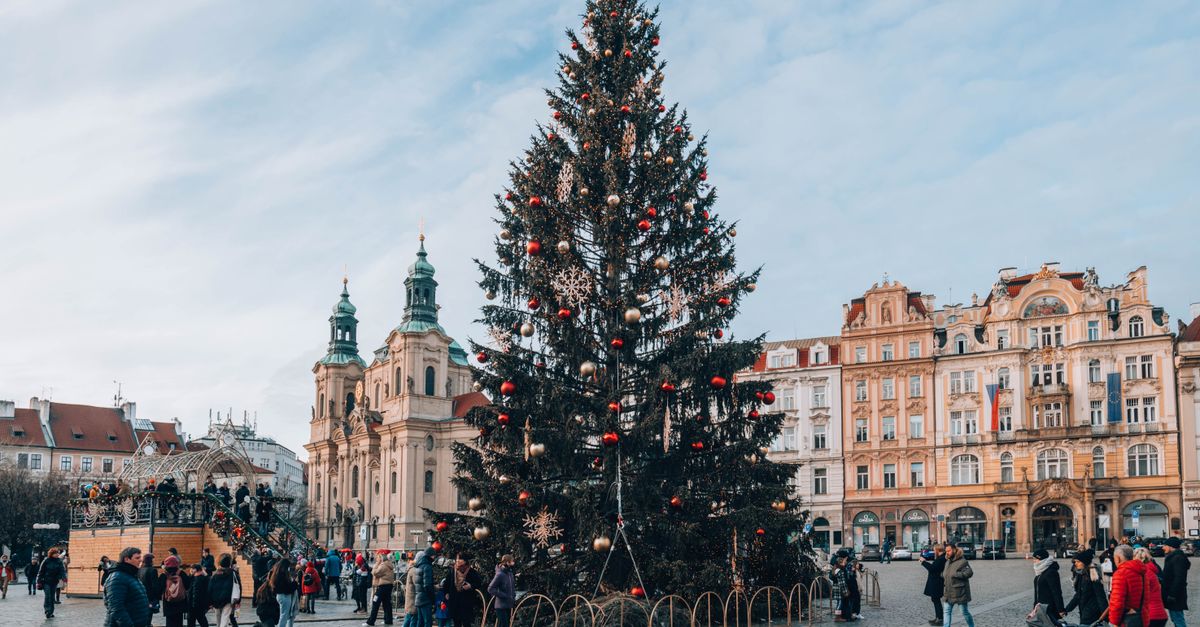
The Christmas markets are the main draw in December, but they are not all priced equally. The markets at Old Town Square (Staroměstské náměstí) and Wenceslas Square (Václavské náměstí) are the most expensive. Here, you are paying a premium for the location.
If you want a more authentic experience with fair prices, take the metro or tram to Náměstí Míru (Peace Square) in the Vinohrady neighborhood, or Karlínské náměstí in Karlín. These are the markets where locals actually go after work. The food is fresher, the crowds are manageable, and the prices are nearly cut in half.
How much does food and drink cost in Prague?
Czech food is hearty, heavy, and perfect for cold weather. However, the price you pay depends entirely on where you sit down.
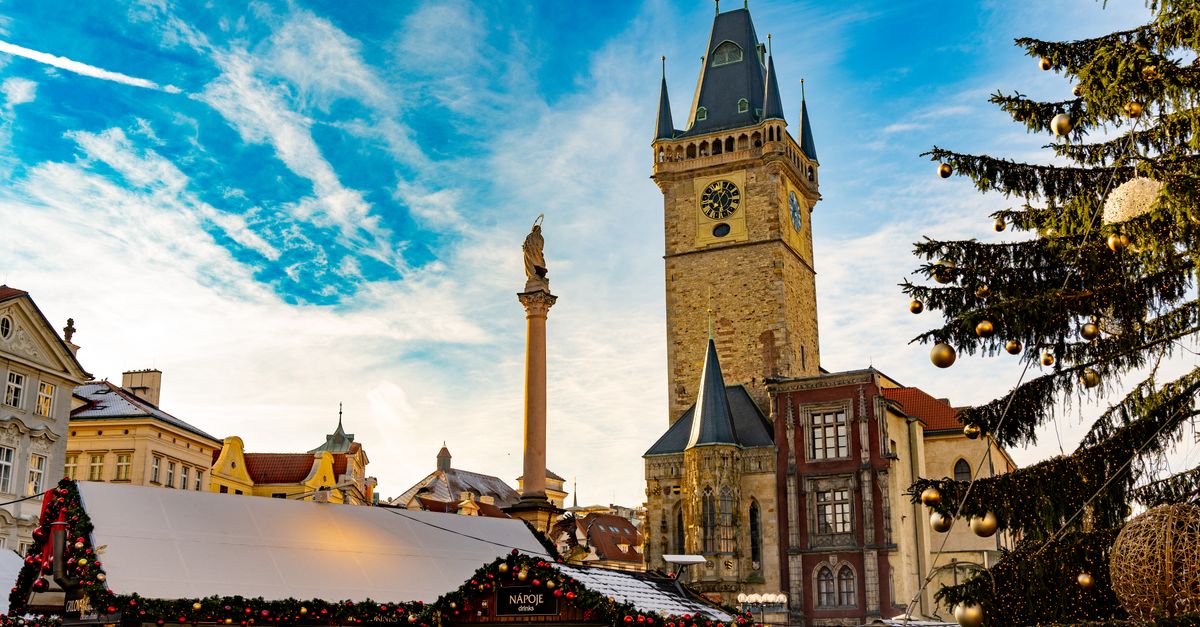
If you eat at a restaurant with an English menu right next to the Astronomical Clock, a plate of goulash will easily run you 380 CZK ($16 USD). Walk just three blocks down a side street, find a traditional Czech pub (hospoda), and you will find the exact same dish for 180 to 220 CZK ($8 to $10 USD).
To save money, look for the “denní nabídka” (daily lunch menu). Between 11:00 AM and 2:00 PM, almost every local restaurant offers a rotating list of traditional meals at highly discounted prices, aimed at local workers.
Then there is the Trdelník: the sweet, spit-roasted pastry you see on every corner. It is heavily marketed as an “ancient Bohemian cake,” but it is actually a modern tourist import from Hungary and Slovakia. If you want to try one, buy a plain cinnamon version for around 80 CZK. Avoid the elaborate ones stuffed with soft-serve ice cream and chocolate sauce that cost 180 CZK or more. They are messy, overpriced, and not remotely traditional.
| Item | Old Town Square price | Fair local price | Where to find the fair price |
|---|---|---|---|
| Svařák (Mulled wine) | 110 CZK | 65 CZK | Náměstí Míru market |
| Pilsner Urquell (0.5L) | 120 CZK | 65 CZK | Local hospoda (e.g., U Rudolfina) |
| Grilled sausage (Klobása) | 150 CZK | 90 CZK | Karlín or Vinohrady markets |
| Trdelník (Plain) | 180 CZK | 80 CZK | Standard bakery |
| Traditional Czech lunch | 350 CZK | 190 CZK | Lunch menu (denní nabídka) |
A realistic daily budget for winter in Prague
To help you plan, here is a realistic breakdown of what you can expect to spend per day depending on your travel style. These figures do not include accommodation, but they cover food, drinks, public transport, and sightseeing.
The budget traveler: 1,000 CZK ($43 USD) per day
This budget is for those who want to experience the city without spending a fortune. You will eat a cheap lunch using the daily lunch menus, grab dinner from a local supermarket or a cheap kebab shop, use public transit, and limit yourself to one or two drinks at the cheaper neighborhood markets.
The mid-range traveler: 2,000 CZK ($86 USD) per day
This is the sweet spot. You can enjoy a nice sit-down dinner at a traditional Czech restaurant, buy a few cups of mulled wine and sausages at the markets, pay for entry to a museum or the Prague Castle grounds, and travel comfortably around the city using public transport.
The splurge traveler: 4,000+ CZK ($170+ USD) per day
With this budget, you can eat at high-end international restaurants, drink craft cocktails in trendy neighborhoods like Karlín, take private tours, and buy whatever you want at the Old Town Square markets without looking at the price tags.
How to get around Prague on a budget
Prague has one of the most efficient, clean, and affordable public transit networks in Europe. There is absolutely no reason to take a taxi. Street taxis in Prague (especially those parked near tourist hubs) are notorious for overcharging tourists. If you absolutely need a private ride, use Uber or Bolt so the price is locked in before you get in the car.
For everything else, use the tram or metro. You can buy tickets directly on the tram using your contactless credit card or phone. Just look for the orange terminal in the middle of the tram carriage, select your ticket, and tap.
- 30-minute ticket: 40 CZK ($1.70 USD)
- 90-minute ticket: 50 CZK ($2.15 USD)
- 24-hour pass: 120 CZK ($5.15 USD)
- 72-hour pass: 330 CZK ($14.15 USD)
Remember to validate paper tickets in the yellow machines at the entrance of metro stations or on buses if you do not buy them digitally. Failing to do so can result in a hefty fine from plainclothes ticket inspectors.
How to spot and avoid winter tourist traps in Prague
December brings out specific scams that target holiday travelers. Keep your eyes open for these three common traps.
First is the “per 100g” food trap. At the Old Town Square market, you will see stalls selling spit-roasted ham (Pražská šunka). The price tag will say something like “90 CZK” in large letters, but in tiny print underneath, it says “per 100g.” When you order, the vendor will carve off a giant 500-gram slab and hand you a bill for 450 CZK ($20 USD). If you want to try the ham, tell them exactly how many grams you want, or ask for a specific price limit before they cut it.
Second is the currency exchange scam. Many market vendors and shops will offer to charge you in Euros instead of Czech Koruna. Never accept this. Their internal exchange rates are predatory. Always choose to pay in the local currency (CZK) when tapping your card.
Third is the Euronet ATM trap. These black-and-yellow ATMs are scattered all over the historic center. They charge high withdrawal fees and use dynamic currency conversion to give you a terrible exchange rate. If you need cash, only use ATMs operated by legitimate local banks such as Česká spořitelna, Komerční banka, or ČSOB. When the machine asks if you want to be charged in your home currency or CZK, always choose “without conversion” to let your own bank handle the exchange rate.
To keep these fair prices in your pocket while you explore, download TruePrice free at https://truepriceapp.com



Frequently asked questions
Can I use Euros at the Prague Christmas markets?
While some main market stalls accept Euros, they use a terrible exchange rate. It is always cheaper and safer to pay in Czech Koruna (CZK) or use a contactless card.
How much does a cup of mulled wine cost in Prague?
At the Old Town Square market, expect to pay 110 to 120 CZK. At local neighborhood markets like Náměstí Míru, you will pay around 60 to 75 CZK for the exact same drink.
Is tap water free in Prague restaurants?
Unlike in some European countries, Czech restaurants rarely offer free tap water. You will usually have to pay for bottled water, which can sometimes cost more than a local draft beer.
Should I buy a Prague public transport pass?
If you plan to take more than three trips a day, a 24-hour pass for 120 CZK is highly cost-effective. Otherwise, single 30-minute tickets for 40 CZK are your best option.
Are shops and markets open on Christmas Day in Prague?
The main Christmas markets in Old Town Square remain open, but standard shops, supermarkets, and many local restaurants close early on December 24th and stay closed on December 25th.
Check fair prices anywhere
TruePrice is free on the App Store and Google Play.