Price guide
The cheapest European countries to visit for a high-value vacation
You can comfortably travel through Eastern Europe and the Balkans on a budget of €30 to €70 per day. Countries like Albania, Bulgaria, Bosnia and Herzegovina, and Poland offer incredible food, rich history, and stunning scenery for a fraction of Western European prices. Using local apps and tracking fair local prices will help you avoid common tourist traps.
I still get annoyed when I see people paying twelve Euros for a mediocre sandwich in Paris. Europe has a reputation for being an expensive playground, but that is only true if you stick to the well-trodden western capitals. If you point your compass slightly east or south, your money goes three to four times further.
I built TruePrice because I got tired of the dual-pricing system that quietly targets tourists the moment they step off a plane. Some of the most beautiful, culturally rich corners of Europe cost a fraction of the western capitals. If you want to explore stunning castles, hike pristine mountains, and eat incredible food without draining your bank account, these are the countries you should be looking at.
Which European countries actually offer the best value?
When people ask about the cheapest European countries to visit, they often think they have to compromise on safety or infrastructure. That is a myth. The Balkan peninsula and parts of Central and Eastern Europe offer world-class travel experiences for a fraction of the cost.
Albania, for instance, has a coastline that rivals Greece but at half the price. Bulgaria offers ancient history and cheap ski resorts. Bosnia and Herzegovina has some of the most dramatic mountain scenery in Europe, alongside a rich, complex history that is incredibly cheap to explore. Poland and Romania provide EU-standard infrastructure, reliable public transport, and vibrant cities without the Western European price tag.
The key is understanding that these economies operate on different scales. Local wages are lower, which means services, dining out, and transport remain highly affordable for anyone earning in Dollars, Pounds, or Euros.
What does a realistic daily budget look like in eastern Europe?
To help you plan, here is a breakdown of what you can expect to spend per day. A backpacker budget assumes hostel stays, cooking some meals, and using public transit. A mid-range budget includes a private room in a guesthouse or 3-star hotel, eating out at local restaurants, and the occasional taxi or museum entry.
| Country | Daily budget (backpacker) | Daily budget (mid-range) | Price of local beer |
|---|---|---|---|
| Bulgaria | €35 | €70 | €2.00 |
| Albania | €30 | €65 | €1.80 |
| Bosnia & Herzegovina | €30 | €60 | €1.50 |
| Poland | €40 | €85 | €2.50 |
| Romania | €38 | €75 | €2.20 |
| Hungary | €45 | €95 | €2.40 |
Where should you go for cheap food, drink, and culture?
Let us look at what your money actually buys you on the ground in these destinations.
In Albania, particularly outside the peak summer months of July and August, you can get a plate of fresh grilled seafood in coastal Saranda for about 800 ALL (roughly 8 EUR). A glass of local wine or a draft beer will rarely set you back more than 200 ALL (2 EUR).
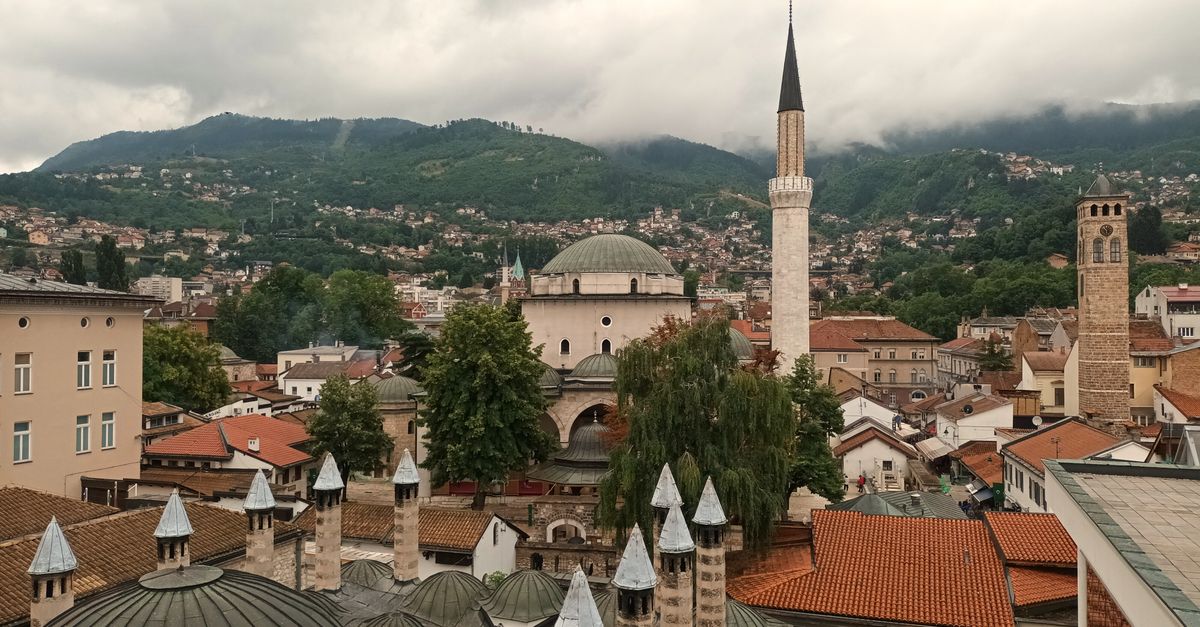
In Bosnia and Herzegovina, the food culture is heavily influenced by Ottoman history. A massive plate of cevapi (grilled minced meat sausages served in fresh somun bread) in Sarajevo costs around 8 BAM (4 EUR) and will keep you full for hours.
Bulgaria is another goldmine for budget food. You can start your day with a banitsa, a traditional flaky pastry filled with sirene cheese, which costs about 2 BGN (1 EUR) at any street bakery. A pint of local Kamenitza beer in a neighborhood pub is rarely more than 3.50 BGN (1.80 EUR).
Poland offers a unique cultural relic: the Bar Mleczny, or milk bar. These are government-subsidized cafeterias that date back to the communist era. They serve hearty, traditional Polish food like pierogi, barszcz, and kotlet schabowy. You can easily get a filling, two-course lunch here for 25 PLN (around 6 EUR).
Why do prices spike for tourists in these cheaper countries?
While these countries are incredibly cheap, they are also prime territory for tourist-specific pricing. Because the local currencies can be confusing (like the Hungarian Forint, where 10,000 HUF is only about 25 EUR), it is very easy to lose track of what things should actually cost.
Dishonest taxi drivers, restaurants without printed prices, and bars in tourist squares routinely charge three times the local rate. In Krakow, for example, a beer in a local neighborhood pub costs about 12 PLN. If you sit down at a terrace directly on the Main Market Square, you might easily be charged 28 PLN or more for the exact same brand.
This is not just about a few extra coins: it is about the principle of not being treated like a walking ATM.
How do you avoid getting ripped off in budget destinations?
Avoiding the tourist tax requires a few simple habits.
First, always walk at least three blocks away from major tourist sights before looking for a place to eat. If the menu has photos of the food and is translated into five languages, you are likely paying a premium.
Second, never hail a taxi off the street without an app. In cities like Bucharest or Budapest, use local ride-hailing apps like Bolt. The price is locked in before you get in the car, eliminating the classic broken meter scam.
Third, pay in the local currency. When a card machine asks if you want to be charged in your home currency or the local currency, always choose the local currency. Your bank will almost always give you a better exchange rate than the merchant’s terminal.
Finally, do not be afraid to ask for a menu with prices before you order. If a waiter is evasive about the cost of an item, walk away.
How can you track fair local prices on the ground?
This is exactly why I built TruePrice. When you are standing in a market in Sofia or trying to negotiate a boat ride in Albania, you do not have time to do hours of research.
With TruePrice, you can quickly look up the country you are in and see the real, fair local price for everyday things: from a cup of coffee to a short taxi ride or a mid-range dinner. It gives you the confidence to negotiate fairly and avoid the places that exist solely to overcharge visitors.
You can download TruePrice for free on iOS and Android to keep your travel budget on track. Download TruePrice free today at https://truepriceapp.com
Frequently asked questions
Is it safe to travel to the cheapest countries in Europe?
Yes, countries like Poland, Bulgaria, and Albania are highly safe for travelers, often ranking similarly to or better than Western European nations for safety. Standard precautions against petty theft in crowded tourist areas still apply.
What is the cheapest month to fly to Europe?
The cheapest months to fly are typically during the shoulder and off-peak seasons, specifically from November to February, excluding the Christmas holidays. March and October also offer great flight deals with milder weather.
Can I use Euros in all cheap European countries?
No, many of these countries use their own currencies, such as the Polish Zloty, Bulgarian Lev, or Albanian Lek. While some places might accept Euros, you will get a much better rate paying in the local currency.
How do I find cheap accommodation in Eastern Europe?
Local guesthouses, often called 'sobe' in the Balkans, and locally owned apartments usually offer the best value. Staying slightly outside the historical center can cut your accommodation costs in half.
Is English widely spoken in these budget destinations?
In major cities and tourist hubs, younger people and hospitality staff speak excellent English. In rural areas, English is less common, but translation apps and basic hand gestures are usually more than enough to get by.