Travel tips
Is Norway expensive? How to survive the sticker shock without missing the magic
Yes, Norway is highly expensive due to high wages and taxes, but you can easily control your costs. By shopping at discount supermarkets like Kiwi and Rema 1000, skipping sit-down restaurants, drinking free tap water, and utilizing public transit, you can keep your daily budget around 800 to 1,200 NOK ($75 to $110 USD).
Yes, Norway has a reputation for clearing out bank accounts faster than a North Sea gust. If you walk into a casual Oslo restaurant blindly and order a burger and a craft beer, the bill will easily cross 400 Norwegian Kroner (around $38 USD). But that does not mean you should cross this spectacular country off your bucket list.
I built TruePrice to help travelers spot where they are getting ripped off and where they are just paying the fair local rate. In Norway, the high prices are rarely “scams” in the traditional sense. Instead, they are the result of high local wages, a strong social safety net, and high taxes. Once you understand how locals navigate their own country, you can experience the fjords, the midnight sun, and the clean cities without needing a second mortgage.
Why is Norway so expensive?
The high cost of living in Norway comes down to a few structural economic choices. The country has a high minimum wage, even for entry-level service jobs. This means that any service requiring human labor, like someone cooking your food, pouring your coffee, or driving your taxi, is going to cost significantly more than it would in southern Europe or the US.
Additionally, Norway levies a standard value-added tax (VAT) of 25% on most goods and services. Food bought in supermarkets has a slightly lower VAT of 15%, but dining out is taxed at the full 25% rate.
Alcohol is also heavily taxed based on its alcohol-by-volume (ABV) percentage. The government uses high prices to discourage heavy drinking, which is why a pint of beer at a pub can easily run you 110 NOK ($10 USD).
How much does food and drink actually cost in Norway?
If you eat at sit-down restaurants for three meals a day, you will easily spend over 1,000 NOK ($95 USD) per person, per day, just on food. A simple lunch at a cafe, like an open-faced sandwich (smørbrød) and a coffee, runs about 180 to 250 NOK ($17 to $24 USD). A dinner main course at a mid-range restaurant starts at 250 NOK ($24 USD) and goes up quickly from there.
However, supermarket prices are much more manageable if you shop smart. Let’s look at the price ranges you can expect for typical items.
Tap water is free and incredibly clean. Never buy bottled water in Norway. It is a literal waste of money, as the water coming out of any bathroom sink is often higher quality than what you get in a plastic bottle.
What is genuinely worth your money in Norway?
Some things in Norway are expensive but absolutely worth the price tag. You should not cut corners on experiences that make the country unique.
The train ride from Oslo to Bergen (the Bergen Line) is widely considered one of the most beautiful train journeys in the world. A standard ticket costs between 400 and 1,000 NOK ($38 to $95 USD) depending on how early you book, and it is worth every single Krone.
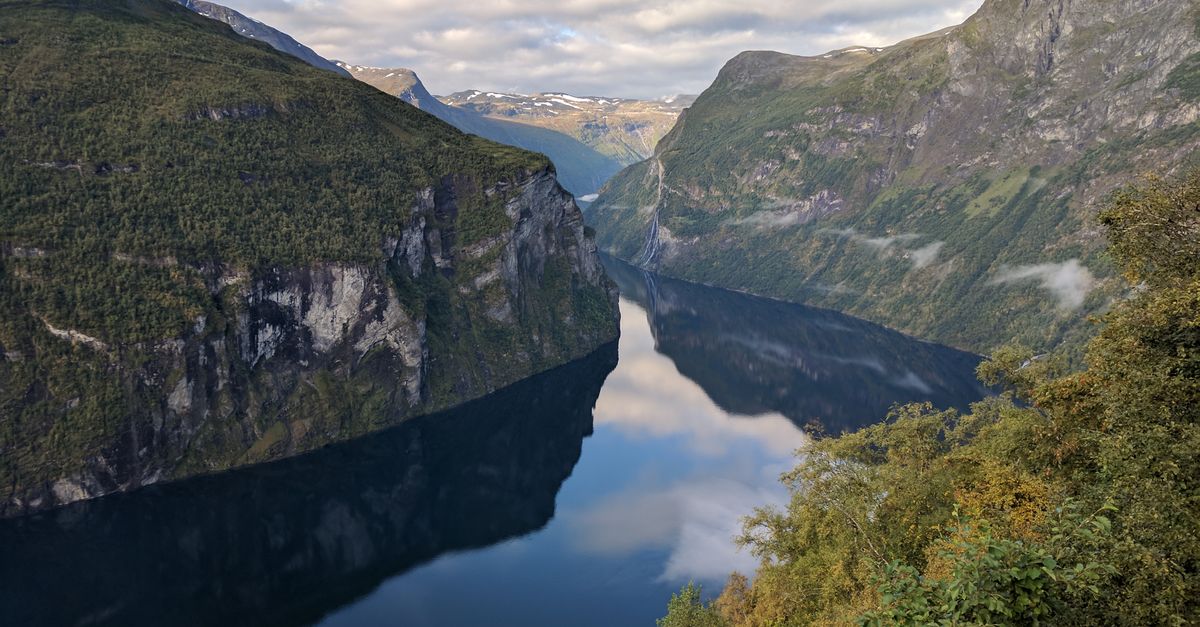
Fjord cruises are another worthy expense. Taking a classic electric ferry through the Nærøyfjord or Geirangerfjord costs around 500 to 800 NOK ($47 to $75 USD). Because these ferries are now mostly silent and electric, the experience of gliding through the steep cliffs without engine noise is spectacular.
How to save money on a Norway travel budget
You do not need to live on tap water and air to survive Norway. A few simple adjustments to your daily routine will keep your budget intact.
First, choose your supermarkets wisely. Avoid the smaller convenience stores like Narvesen or 7-Eleven, where prices are double what you would pay elsewhere. Instead, do your grocery shopping at discount supermarkets: Rema 1000, Kiwi, and Coop Extra are the cheapest options. Look for the store-brand items (like “First Price” at Kiwi) for basic staples like eggs, bread, and pasta.
Second, make lunch your main meal or pack a picnic. Norwegians themselves rarely eat out for lunch. They typically pack a simple lunch box (matpakke), usually consisting of open-faced sandwiches. You can easily buy a fresh loaf of bread, some cheese, and sliced meat at a Kiwi for under 80 NOK ($7.50 USD) and have lunch sorted for three days.
Third, embrace the right to roam. Norway has a law called Allemannsretten (the freedom to roam). This law allows you to hike, camp, and forage anywhere in open country, even on private land, as long as you respect nature and keep at least 150 meters away from the nearest inhabited house. This makes accommodation completely free if you are willing to camp.
The ultimate Norway price comparison
To show you how drastically your choices affect your wallet, here is a breakdown of typical tourist-trap choices versus budget-smart alternatives.
| Expense Category | The Tourist-Trap Way | Typical Cost (NOK) | The Budget-Smart Way | Typical Cost (NOK) |
|---|---|---|---|---|
| Water | Bottled water from Narvesen | 45 NOK | Tap water in a reusable bottle | 0 NOK |
| Lunch | Sit-down cafe sandwich & soda | 220 NOK | Bakery roll or Kiwi grocery picnic | 60 NOK |
| Dinner | Mid-range restaurant main & beer | 400 NOK | Buying ingredients at Rema 1000 | 110 NOK |
| Alcohol | Three pints of beer at a pub | 330 NOK | One beer at a pub, two from Vinmonopolet | 180 NOK |
| Transport | Taxi from Oslo Airport to center | 900 NOK | Flytoget express train or Vy regional train | 120 to 230 NOK |
How to handle transport and accommodation without going broke
Taxis in Norway are a financial emergency. A 10-minute ride can easily cost 250 NOK ($24 USD). Avoid them entirely. All major cities have highly efficient, clean, and punctual public transport networks. In Oslo, download the Ruter app. A single ticket covers buses, trams, metro (T-bane), and even local ferries to the islands in the Oslofjord.
When traveling between cities, book your trains weeks in advance on the Vy website or app. They offer discounted tickets called “Minipris” which are often half the price of a last-minute ticket.
For accommodation, hotels are expensive, with basic double rooms starting around 1,200 NOK ($113 USD) per night. If you are not up for camping, look for private rooms in guesthouses or Airbnb properties where you have kitchen access. Being able to cook your own breakfast and dinner even half the time will save you hundreds of dollars over a week-long trip.
Norway is undeniably expensive, but it is not an impossible destination. By understanding where the real costs lie and using the local workarounds, you can experience one of the most beautiful countries on Earth without draining your savings.
To keep track of what things should actually cost while you are on the ground, download TruePrice for free at https://truepriceapp.com. It helps you instantly compare local prices to what you should actually be paying, keeping your budget on track.
Frequently asked questions
Is tap water safe to drink in Norway?
Yes, Norway has some of the cleanest tap water in the world. You should never buy bottled water; simply carry a reusable bottle and fill it up from any tap for free.
Why is alcohol so expensive in Norway?
Norway taxes alcohol heavily based on its strength to discourage high consumption. You can only buy drinks stronger than 4.7% ABV at the state-run monopoly store called Vinmonopolet, which closes early.
What are the cheapest supermarkets in Norway?
Kiwi, Rema 1000, and Coop Extra are the cheapest grocery chains in Norway. Avoid convenience stores like Narvesen, Joker, and 7-Eleven, which have massive markups on basic items.
Can I travel Norway without a credit card?
Norway is almost entirely cashless. You do not need cash at all; in fact, many buses, restaurants, and shops do not accept physical money, so a card is essential.
Is wild camping allowed in Norway?
Yes, thanks to the right to roam (Allemannsretten), you can camp for free on uncultivated land for up to two nights in one spot, provided you stay at least 150 meters away from the nearest house.