Travel tips
Is Greece expensive? The real cost of gyros, ferries, and beach clubs
Greece is highly affordable if you avoid the global tourist hotspots. While Mykonos and Santorini can easily drain your budget with premium pricing, destinations on the mainland and lesser-known islands offer incredible value, letting you travel comfortably for 70 to 120 EUR per day.
If you are planning a trip to Greece, you have probably heard two completely contradictory stories. One friend tells you they spent 15 EUR a day eating fresh seafood by the water on a quiet island. Another friend tells you they had to take out a second mortgage to pay for a sunbed in Mykonos.
Both of these stories are entirely true.
I built TruePrice to help travelers cut through the noise and see what things actually cost on the ground. In Greece, there is no single price tag. Instead, the country has a dual-speed economy: one for global influencers, and one for the rest of us. Let us look at what you will actually spend, how to avoid the tourist traps, and how to experience the best of Greece without overpaying.
The two faces of Greek travel costs
The biggest mistake travelers make is treating Greece as a uniform destination. In reality, your budget will live or die based on geography.
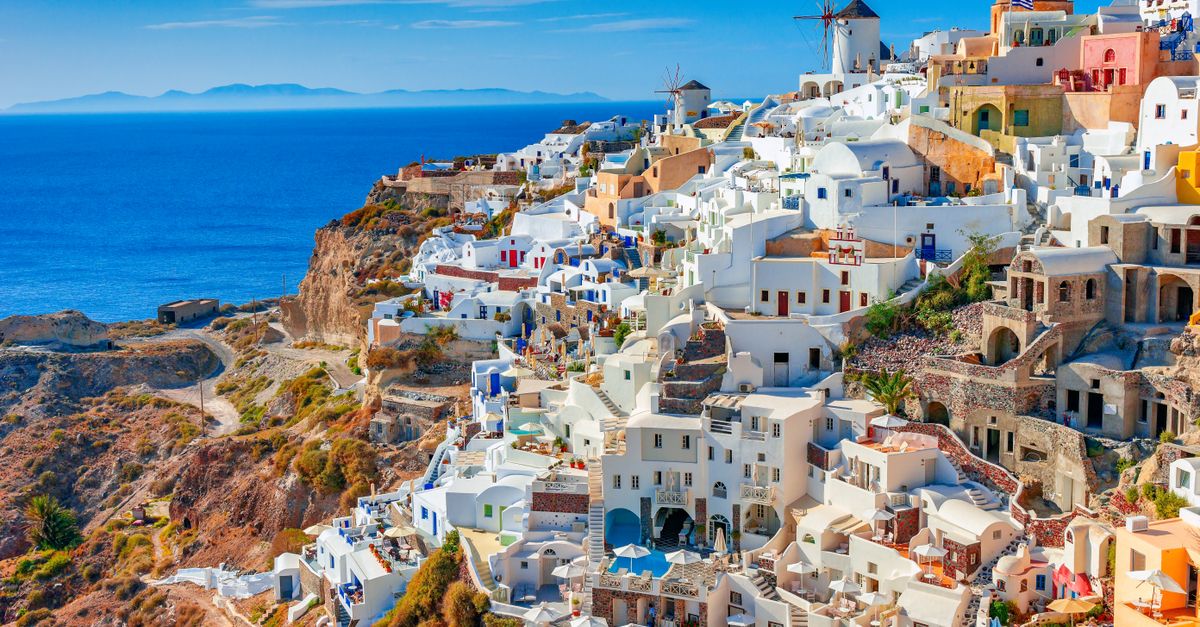
Ultra-popular islands like Santorini and Mykonos operate in a pricing bubble. Here, global demand drives prices to levels that rival London or New York. A simple coffee can cost 8 EUR, and a mid-range dinner can easily top 100 EUR for two.
On the other hand, the Greek mainland and lesser-known islands offer some of the best value in southern Europe. Places like the Peloponnese peninsula, or islands like Milos, Naxos, and Syros, let you experience authentic Greek culture at a fraction of the cost.
How much does food and drink actually cost?
Food is one of the greatest joys of traveling in Greece, and if you eat like a local, it is incredibly affordable.
The baseline for cheap eats is the humble pita gyro. A warm pita stuffed with grilled pork or chicken, tzatziki, tomatoes, onions, and fries should cost between 3.50 EUR and 5.00 EUR. If you are paying more than 6.00 EUR for a standard gyro, you are standing in a tourist trap.
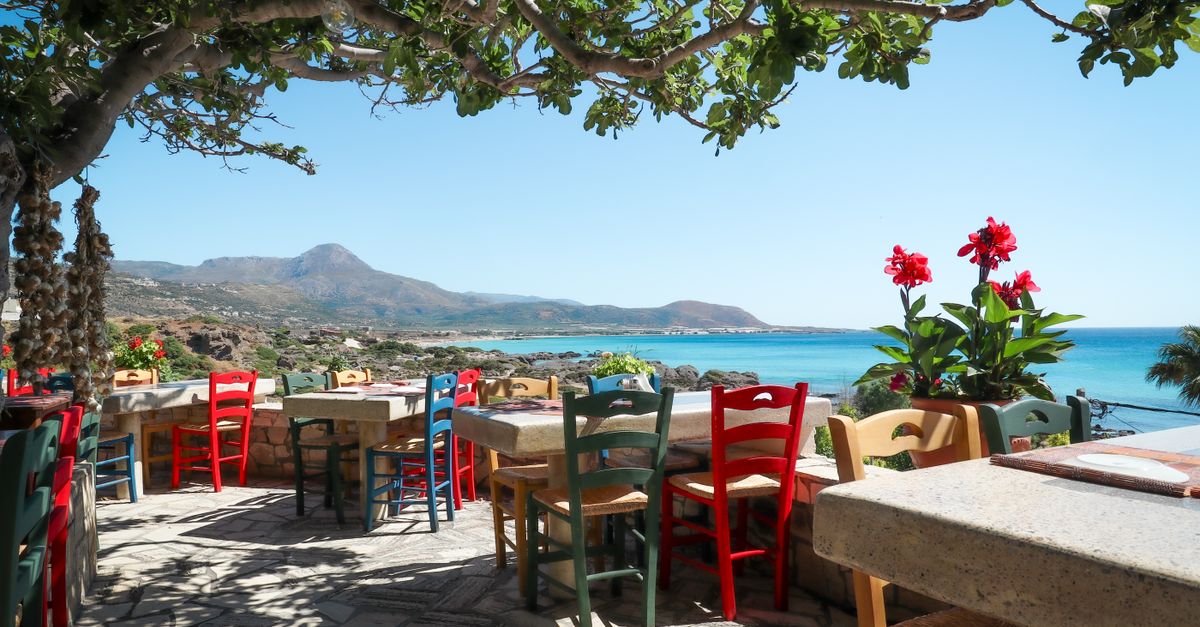
For a sit-down meal, look for a traditional taverna rather than a modern restaurant. A classic taverna meal consisting of a Greek salad, a portion of tzatziki with pita, and two main dishes like moussaka or souvlaki should run about 30 EUR to 45 EUR for two people, including a half-liter of house wine.
Here is a quick tip on water: Greek law mandates a maximum price for bottled water at kiosks and transit hubs. A 500ml bottle of water should never cost more than 0.50 EUR, and a 1.5-liter bottle should be around 1.00 EUR in supermarkets. If a shop tries to charge you 3.00 EUR for a basic bottle of water, call them out on it.
The hidden cost of Greek island hopping
Getting from island to island is often where budgets fall apart. Ferries are no longer the cheap, romantic public transit they used to be. High-speed catamarans have cut travel times in half, but they have doubled the prices.
A one-way ticket on a high-speed ferry from Athens to Mykonos or Santorini can easily cost 80 EUR to 90 EUR per person. If you are a family of four, just getting to the island and back can cost over 700 EUR.
To save money, look for the slower, larger conventional car ferries. They take about twice as long, but the tickets are often half the price (around 40 EUR to 50 EUR), and the ride is much smoother if you are prone to seasickness.
Accommodation and beach club pricing traps
Where you sleep and where you sunbathe will be your largest expenses. In Athens, you can find excellent boutique hotels for 80 EUR to 120 EUR a night. In Santorini, a hotel room with a caldera view will rarely go for less than 300 EUR per night during high season, and can easily scale into thousands.
The beach club phenomenon is another major budget drain. In places like Mykonos or Paros, beach clubs have monopolized the sand. Renting a set of two sunbeds and an umbrella can cost anywhere from 40 EUR to 150 EUR per day, often with a minimum spend on food and drinks of another 100 EUR.
However, Greek law states that there are no private beaches. At least 50% of every beach must remain open to the public for free. You can always bring your own towel, buy an umbrella at a local supermarket for 15 EUR, and sit right next to the luxury beach club for free.
Here is a breakdown of what you can expect to pay across different regions of Greece:
| Expense type | Budget Greece (e.g., Peloponnese, Milos) | Popular Greece (e.g., Crete, Paros) | Premium Greece (e.g., Santorini, Mykonos) |
|---|---|---|---|
| Pita gyro | €3.50 - €4.50 | €4.00 - €5.00 | €7.00 - €15.00 |
| Taverna meal (2 people) | €25 - €35 | €40 - €60 | €80 - €150+ |
| Freddo Espresso | €2.50 - €3.00 | €3.50 - €4.50 | €6.00 - €9.00 |
| Double room (per night) | €50 - €80 | €90 - €160 | €250 - €600+ |
| Sunbed rental (set of 2) | Free (with drink) or €10 | €15 - €30 | €50 - €150+ |
A realistic daily budget for Greece
To help you plan, here are three realistic daily budgets per person, assuming you are traveling with a partner and splitting the cost of accommodation.
If you are on a budget of 120 EUR per day, you can have an incredible mid-range trip. This allows for a clean, air-conditioned double room, a couple of sit-down meals at local tavernas, a few coffees, and public transit or a scooter rental to explore the island.
How to keep your Greece trip affordable
If you want to keep costs low without sacrificing the magic of Greece, use these three simple strategies:
First, travel during the shoulder seasons. June and September offer the absolute best balance of warm weather and lower prices. Accommodation prices in July and August can be double what they are in September, and the crowds make exploring far less enjoyable.
Second, rent a scooter or a small car. Public buses on the islands are cheap (usually 1.80 EUR to 2.50 EUR per ride), but they can be unreliable and crowded. Taxis are notoriously expensive and often do not use meters on the islands. Renting a scooter for 20 EUR to 30 EUR a day gives you total freedom and pays for itself quickly.
Third, eat your breakfast at local bakeries. Instead of paying 15 EUR for a hotel breakfast, walk to the nearest bakery. You can get a massive, fresh spanakopita (spinach and feta pie) and a Freddo cappuccino for less than 6 EUR.
I built TruePrice to help you spot these price differences instantly while you travel. By knowing the fair local price for everything from a taxi ride to a Greek salad, you can avoid tourist traps and spend your money on what actually matters. Download TruePrice free on the App Store to keep your travel budget on track: https://apps.apple.com/app/id6762357469
Frequently asked questions
Is Greece cheaper than Italy or Spain?
Generally, yes. While luxury Greek islands match Italian and Spanish prices, taverna meals, local transport, and mid-range accommodation on the mainland and lesser-known islands are significantly cheaper than equivalent options in Italy or Spain.
Is tap water safe to drink in Greece?
Tap water is perfectly safe to drink in Athens and most of the Greek mainland. On the islands, however, the tap water is brackish and used only for washing, meaning you will need to buy bottled water, which is legally price-capped at 0.50 EUR for a small bottle.
How much do you tip in Greece?
Tipping is not mandatory in Greece, but it is highly appreciated. Rounding up the bill or leaving a 5% to 10% tip at tavernas for good service is standard practice, while leaving 1 EUR to 2 EUR per day for hotel housekeeping is common.
What is the cheapest month to visit Greece?
May and October are the cheapest months that still offer pleasant weather, while June and September offer the best balance of warm seas, open venues, and accommodation prices that are 30% to 50% cheaper than July and August.
Do I need cash in Greece, or are cards widely accepted?
Greek law requires almost all businesses, including taxis and beach kiosks, to accept card payments. However, it is always smart to carry 20 EUR to 30 EUR in cash for small purchases, tips, or in case a card terminal loses connection on a remote beach.